


Zhejiang Celadon Exhibition in Morocco Highlights Centuries-Old China-Morocco Cultural Exchange
RABAT, MOROCCO: A major exhibition showcasing the history, craftsmanship and global journey of Zhejiang celadon opened in Rabat on September 10, 2026, bringing together cultural and archaeological perspectives from China and Morocco.
Titled “Celadon Breeze from the Sea: A Journey Through Zhejiang Celadon,” the exhibition explores the development of Zhejiang’s renowned celadon tradition and its role in cultural exchanges across the ancient Maritime Silk Road.
The exhibition is jointly hosted by the Zhejiang Provincial Department of Culture, Radio, Television and Tourism and the China Cultural Center in Rabat. It is organized by the Zhejiang Provincial Institute of Cultural Relics and Archaeology, with support from the Jinhua Bureau of Culture, Radio, Television and Tourism and the Longquan Celadon Museum.
The exhibition brings together archaeological objects, historical narratives and cultural activities to illustrate how Zhejiang celadon travelled across seas and connected communities through trade, cultural interaction and the exchange of ideas.
China and Morocco Strengthen Cultural Dialogue
The opening ceremony brought together representatives from the Chinese and Moroccan cultural and archaeological communities.
Among those attending were Yu Jinsong, Chinese Ambassador to Morocco; Liu Chengang, Cultural Counselor of the Chinese Embassy in Morocco and Director of the China Cultural Center in Rabat; Fatima Ait M’hand, representative of the Moroccan National Institute of Archaeology and Heritage Sciences; and Driss Drissi, President of the Rabat Association for the Revival of Cultural and Artistic Heritage.
Speaking at the opening, Ambassador Yu Jinsong highlighted the broader importance of cultural exchange between China and African countries.
He noted that 2026 marks the 70th anniversary of the establishment of diplomatic relations between China and African countries and the “China-Africa Year of People-to-People Exchanges.”
According to Yu, celadon represents an enduring example of historical interaction between China and Africa along the Maritime Silk Road. He expressed the hope that the exhibition would contribute to stronger cultural connections, expand archaeological cooperation between China and Morocco and help bring historical heritage closer to contemporary audiences.
Celadon as a Link Across the Maritime Silk Road
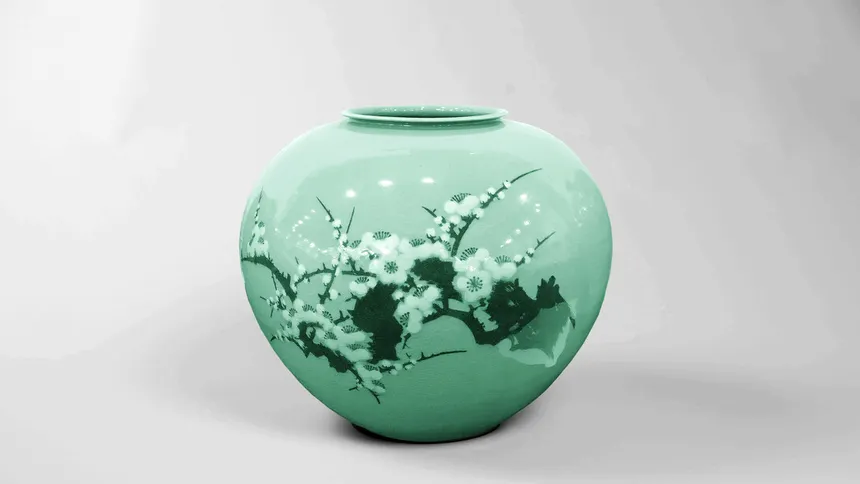
Zhejiang, particularly the Longquan area, has long been associated with China’s celebrated celadon tradition. Characterized by its distinctive green glaze and refined craftsmanship, Longquan celadon became an important commodity in international maritime trade.
The exhibition uses this history to demonstrate how ceramics travelled beyond their place of production, becoming part of cultural encounters between distant societies.
Rather than presenting celadon simply as an example of Chinese ceramic art, the exhibition places it within a broader story of trade, archaeology, technology and cross-cultural communication.
Through archaeological discoveries and historical evidence, visitors can explore how ceramic production and maritime trade contributed to connections between Asia, Africa and other parts of the world.
Four Sections Trace the Story of Zhejiang Celadon
The exhibition is organized into four main sections: “Kiln Fires That Endure,” “Celadon Across the World,” “Sailing Across the Seas” and “Envoys of Exchange.”
Kiln Fires That Endure
The first section traces the evolution of Zhejiang celadon, focusing on changes in ceramic technology, production methods and aesthetic traditions.
It highlights the development of kiln technologies and the craftsmanship that helped Zhejiang celadon establish its distinctive identity over centuries.
Celadon Across the World
The second section examines the international spread of Zhejiang celadon.
Archaeological evidence from kiln sites and overseas discoveries provides insight into the scale and reach of the celadon trade, showing how ceramics produced in Zhejiang travelled to distant markets.
Sailing Across the Seas
The third section focuses on the maritime routes that carried Zhejiang celadon beyond China.
Evidence from ancient ports, shipwrecks and archaeological sites helps reconstruct the networks through which ceramics travelled across the seas, including routes connecting China with regions of Africa.
The section demonstrates that maritime trade was not only an economic activity but also an important channel for cultural interaction.
Envoys of Exchange
The final section explores historical connections between China and Morocco through the travels of Ibn Battuta, the renowned Moroccan traveller whose journeys across Asia and Africa provide an important historical perspective on contacts between different civilizations.
By connecting travel records with archaeological evidence, the exhibition presents a broader picture of the movement of people, goods and knowledge between China and Morocco.
Moroccan Experts Welcome Archaeological Cooperation
Moroccan representatives at the opening emphasized the importance of using archaeology and material heritage to deepen understanding of historical exchanges.
Fatima Ait M’hand described the exhibition as a dialogue between the ancient civilizations of China and Morocco. She expressed hope that the “celadon breeze” travelling across the sea would carry knowledge, beauty and friendship between the two countries.
Driss Drissi also called for greater cooperation between Chinese and Moroccan archaeological experts.
He proposed establishing a joint working group of Chinese and Moroccan archaeologists to conduct further research into archaeological remains in Morocco’s Souss region.
Such cooperation could help researchers examine material evidence and potentially expand the historical record of interactions between China and Morocco.
Exhibition Combines Objects With Cultural Experiences
Following the opening ceremony, guests toured the exhibition and viewed the celadon works on display.
The programme also includes hands-on activities designed to introduce visitors to traditional Chinese culture. These include celadon workshops, traditional tea culture experiences and activities related to intangible cultural heritage.
The combination of archaeological objects and interactive cultural programmes gives visitors an opportunity to understand not only the history of celadon but also the craftsmanship and cultural traditions surrounding it.
Virtual Exhibition Expands Global Access
Alongside the physical exhibition, organizers launched a companion virtual exhibition titled “Celadon Breeze from the Sea.”
The digital exhibition provides another way for audiences to explore Zhejiang celadon and its historical journey, extending access beyond visitors who can attend the Rabat exhibition in person.
The initiative also reflects the growing role of digital platforms in cultural preservation and international heritage exchange.
Academic Discussions to Explore Celadon and Cross-Cultural Exchange
During the exhibition period, Chinese and Moroccan experts are expected to participate in academic discussions focusing on Zhejiang celadon archaeology, traditional craftsmanship and cross-cultural exchange.
The discussions will use archaeological evidence and historical research to explore the movement of ceramics, technologies and cultural ideas across regions.
Such academic engagement is expected to complement the public exhibition while creating opportunities for researchers from both countries to identify new areas for cooperation.
A Cultural Bridge Between China and Morocco
The Rabat exhibition demonstrates how material heritage can serve as a bridge between civilizations.
Zhejiang celadon, which originated from China’s long-established ceramic traditions, became part of international maritime networks that connected different regions and cultures. Its journey provides evidence of historical interaction extending far beyond the kilns where the ceramics were produced.
By bringing this heritage to Morocco, “Celadon Breeze from the Sea” offers visitors an opportunity to explore the historical links between China and Africa while highlighting the continuing importance of cultural and archaeological cooperation.
The exhibition runs through September 30, 2026, with cultural activities and academic exchanges taking place alongside the main display.
As China and Morocco continue to expand cooperation in culture, archaeology and people-to-people exchange, the exhibition presents Zhejiang celadon not only as an artistic heritage but also as a symbol of dialogue, connectivity and shared historical discovery.