


[ad_1]
The event was organized by Narayan Sakar Hari, a self-proclaimed spiritual leader known as “Bhole Baba“, and took place in a village within the Hathras district.
Reports indicate that the crowd at the satsang (prayer meeting) far exceeded the permitted number of 80,000, with over 250,000 devotees in attendance.
The prayer meeting was held in a temporary tent erected on a muddy field.
The deadly crush occurred when Bhole Baba exited the stage and made his way towards his vehicle after the conclusion of the event. A significant number of devotees rushed out of the tent, hoping to touch his feet or the ground he had walked on, resulting in a chaotic and fatal situation. Many individuals were trampled and suffocated, while others fell into a nearby mud field and were crushed. The tragedy has been attributed to various factors, including inadequate planning and crowd management by the organizers, insufficient safety measures and exits, and an attendance that surpassed the venue’s capacity.
In response to the incident, the Uttar Pradesh government has initiated a judicial probe, which will be conducted by a retired High Court judge and two retired IAS officers.
An FIR has been filed against the event organizers, although Bhole Baba himself has not been implicated at this time. Bhole Baba, a member of the Dalit community, has a controversial history, including an arrest in 2000 for allegedly learning “magical powers” and an incident in Agra where he allegedly seized the body of a deceased teenager, claiming he could revive her through his supposed abilities.
The Hathras tragedy is one of many deadly stampedes that have occurred at religious gatherings in India, often due to inadequate crowd management, lack of safety measures, and the immense popularity of certain religious figures. Similar incidents include the 2016 explosion at a temple in Kerala (112 deaths), the 2013 stampede at a bridge near a temple in Madhya Pradesh (115 deaths), and the 2008 stampede at a hilltop temple in Jodhpur (224 deaths).
This latest tragedy emphasizes the urgent need for more stringent regulations and improved planning for large-scale religious events in India to prevent such devastating loss of life in the future.
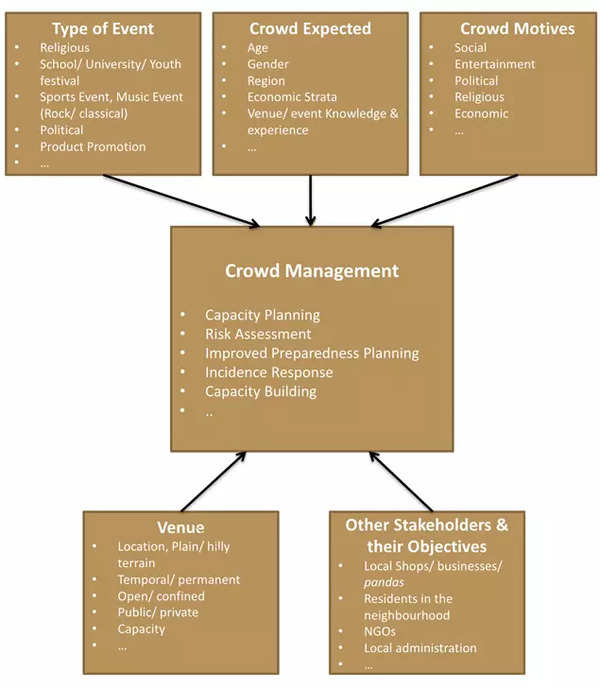
Here is an FAQs on National Disaster Management Authority (NDMA)’s comprehensive set of guidelines focused on effective crowd management.
What are the new guidelines on crowd management?
The NDMA has released a comprehensive guide titled “Managing Crowd at Events and Venues of Mass Gathering.” This guide aims to equip state governments, local authorities, administrators, and event organizers with strategies and procedures for effective crowd management at places of mass gatherings. The NDMA emphasizes a structured and integrated approach to prevent crowd-related disasters, which are primarily man-made and can be avoided with proper planning and execution.
Why was this guide created?
The guide was created in response to the recurring stampedes and crowd disasters at places of mass gathering, including religious events, railway stations, and social or political gatherings. With the increasing population and urbanization, the probability of such events has risen. NDMA Vice Chairman M Shashidhar Reddy highlighted that professional crowd management is a relatively new concept worldwide, developed in response to various disasters. The objective is to “guide the organizers, administrators, and other stakeholders for effective crowd management at places of mass gathering.”
What are the key causes and triggers for crowd disasters?
The guide identifies several causes and triggers for crowd disasters, categorized into six main areas:
- Structural issues: Collapses of temporary structures, narrow and poorly lit pathways, unauthorized constructions, etc.
- Fire/electricity hazards: Fires in makeshift facilities, unauthorized fireworks, inadequate fire safety measures, and short circuits.
- Crowd control failures: Overcrowding due to poor planning, lack of access control, inadequate exit routes, and uncontrolled parking.
- Crowd behavior: Panic, rush for entrances or exits, clashes due to delays, and inappropriate reactions to emergencies.
- Security Lapses: Under-deployment of security personnel, lack of coordination, poor communication systems, and inadequate surveillance.
- Lack of coordination: Poor coordination between various stakeholders, inadequate infrastructure, and delayed communication.
Hathras Horror: ‘Satsang’ Stampede Kills Over 100 In U.P. | CM Yogi Puts Rescue On War-footing
What strategies are recommended for effective crowd management?
The guide outlines several strategies for effective crowd management:
- Capacity planning: Long-term infrastructure development based on the popularity and periodicity of events, with staging points for rest and monitoring.
- Understanding crowd behavior: Identifying and managing potential miscreants tactfully to prevent mass panic or chaos.
- Risk analysis and preparedness: Identifying potential threats, conducting risk assessments, and developing emergency plans.
- Information management: Efficient information dissemination to visitors, organizers, security personnel, and local residents.
- Safety and Security Measures: Implementing general and specific safety guidelines, deploying barriers, and ensuring emergency medical services.
- Transportation and traffic management: Developing emergency transportation plans and managing traffic flow effectively.
How does the guide address the role of various stakeholders?
The guide emphasizes a stakeholder approach, involving local shops, residents, NGOs, and local administration in the planning and management process. A unified control system is recommended to bring together agencies with different functional roles to work effectively without affecting individual accountability. This approach ensures that all stakeholders have a clear understanding of their responsibilities and work towards a common goal.
What is the role of technology in crowd management according to the guide?
The guide highlights the importance of modern technological tools and models for effective crowd management. It encourages the use of information and communication technology (ICT), geographical information systems (GIS), closed-circuit television (CCTV) cameras, and UAVs for monitoring and managing crowds. These technologies help in decision-making, crowd simulation, and real-time management during events.
What legal provisions are considered in the guide?
The guide collates current legal provisions for crowd control and management, including the Disaster Management Act of 2005, which defines disaster management as a continuous and integrated process involving prevention, mitigation, capacity-building, preparedness, response, and rehabilitation. It also references other relevant laws like the Police Act of 1861, the Kerala Police Act of 2011, and the Cinematograph Act of 1952.
How can stakeholders build capacity for crowd management?
The guide suggests a capacity-building framework, including research, education, and training for all stakeholders involved in crowd management. It highlights the importance of continuous improvement through mock drills, audits, exercises, and the adoption of best practices from past experiences and theoretical inputs.
(With inputs from agencies)
[ad_2]
Source link