


[ad_1]
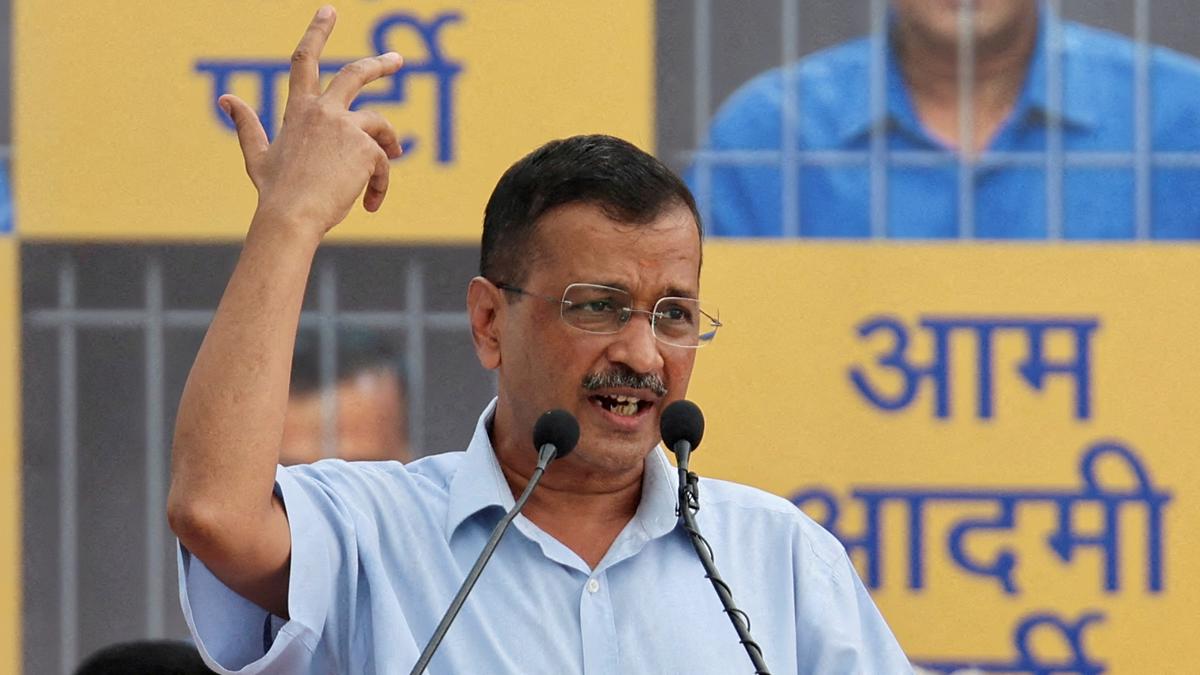
A file picture of Delhi Chief Minister Arvind Kejriwal.
| Photo Credit: Reuters
The Supreme Court on Wednesday (August14, 2024) refused immediate interim relief to Delhi Chief Minister Arvind Kejriwal in the CBI case connected to the Delhi Excise policy case.
“We are not granting any interim bail,” the Supreme Court said.
A Bench headed by Justice Surya Kant issues notice and posted Mr. Kejriwal’s case for bail on August 23.
On August 12, theSupreme Court agreed to take up Mr. Kejriwal’s plea after senior advocate Abhishek Singhvi, appearing for him, sought an urgent listing.
The Delhi High Court had on August 5 upheld the arrest of the Chief Minister as legal, and said there was no malice in the acts of the Central Bureau of Investigation (CBI) which demonstrated how the AAP supremo could influence witnesses who could muster the courage to depose only after his arrest.
The High Court had asked him to move the trial court for regular bail in the CBI case.
The High Court had noted that the loop of evidence against the chief minister was closed after collection of relevant evidence following his arrest by the CBI and it cannot be said that it was without any justifiable reason or illegal.
It had said Kejriwal is not an ordinary citizen but a distinguished recipient of the Magsaysay Award and the convenor of the Aam Aadmi Party.
Also Read : Watch | What was the New Delhi Excise Policy all about, and why is Arvind Kejriwal in trouble?
“The control and the influence which he has on the witnesses is prima facie borne out from the fact that these witnesses could muster the courage to be a witness only after the arrest of the petitioner, as highlighted by the special prosecutor.
“Also, it establishes that the loop of evidence against the petitioner got closed after the collection of relevant evidence after his arrest. No malice whatsoever can be gathered from the acts of the respondent (CBI),” the High Court had said.
The High Court had dismissed Mr. Kejriwal’s plea challenging his arrest, saying it was only after sufficient evidence was collected and sanction was obtained in April 2024 that the agency proceeded with further probe against him.
It had noted that the links to the crime extended even to Punjab but material witnesses were not coming forward due to the influence exercised by Mr. Kejriwal by virtue of his position. It was only after he got arrested that the witnesses came forward to record their statements, the High Court had said.

“It is a bounden duty of every court, more so the courts of first instance, to ensure that the extraordinary powers of arrest and remand are not misused or are resorted to by the police in a casual and cavalier manner,” the High Court had observed.
The Chief Minister, who was arrested by the ED on March 21, was granted bail by the trial court in the money laundering case on June 20. However, the trial court’s order was stayed by the high court.
On July 12, the Supreme Court granted him interim bail in the money laundering case.
The excise policy was scrapped in 2022 after the Delhi lieutenant governor ordered a CBI probe into alleged irregularities and corruption involving the formulation and execution of the excise policy.
Also Read : How new excise policy turned into a political battleground in Delhi
According to the CBI and the ED, irregularities were committed while modifying the excise policy and undue favours extended to licence holders.
(With inputs from Agencies)
[ad_2]
Source link